

Japanese quotes about life are short, but they hit deep. A few characters can hold a whole lesson on patience, calm, or courage.
What are the best Japanese quotes about life? This guide has 250+ of them, each with the Japanese text, romaji (English spelling of the sounds) and a plain English meaning. You will find Japanese proverbs (kotowaza), wise sayings (kakugen), four-character idioms (yojijukugo), and words from poets, samurai and Zen teachers.
Table of Contents
Japanese Quotes About Life and Wisdom

Japanese wisdom is built on balance, humility and patience. These sayings come from farms, temples, tea rooms and Edo-period streets. Many are still used in daily talk today.
Quick answer: what is the difference between kotowaza and kakugen? A kotowaza is a traditional proverb with no known author. A kakugen is a wise saying, often from a known person.
Life, luck and time
- 人生山あり谷あり (Jinsei yama ari tani ari): Life has mountains and valleys.
- 禍福は糾える縄の如し (Kafuku wa azanaeru nawa no gotoshi): Good and bad luck twist together like a rope.
- 人間万事塞翁が馬 (Ningen banji Saio ga uma): You cannot tell good luck from bad.
- 明日は明日の風が吹く (Ashita wa ashita no kaze ga fuku): Tomorrow brings its own wind.
- 覆水盆に返らず (Fukusui bon ni kaerazu): Spilled water never returns to the tray.
- 後の祭り (Ato no matsuri): The festival after it ends. Too late.
- 光陰矢の如し (Koin ya no gotoshi): Time flies like an arrow.
- 歳月人を待たず (Saigetsu hito o matazu): Time waits for no one.
- 月日に関守なし (Tsukihi ni sekimori nashi): No guard can stop the days.
- 少年老い易く学成り難し (Shonen oi yasuku gaku nari gatashi): Youth fades fast. Learning takes long.
- 去る者は日々に疎し (Saru mono wa hibi ni utoshi): Those who leave fade from mind.
- 住めば都 (Sumeba miyako): Wherever you live becomes home.
- 待てば海路の日和あり (Mateba kairo no hiyori ari): Wait, and good sailing weather comes.
- 果報は寝て待て (Kaho wa nete mate): Good luck comes to those who wait.
- 水に流す (Mizu ni nagasu): Let it flow away like water.
- 時は金なり (Toki wa kane nari): Time is money.
Learning and humility
- 井の中の蛙大海を知らず (I no naka no kawazu taikai o shirazu): A frog in a well does not know the ocean.
- 能ある鷹は爪を隠す (Noaru taka wa tsume o kakusu): A skilled hawk hides its claws.
- 実るほど頭を垂れる稲穂かな (Minoru hodo kobe o tareru inaho kana): The riper the rice, the lower it bows.
- 百聞は一見に如かず (Hyakubun wa ikken ni shikazu): Seeing once beats hearing a hundred times.
- 聞くは一時の恥、聞かぬは一生の恥 (Kiku wa ittoki no haji, kikanu wa issho no haji): Asking is a moment of shame. Not asking is shame for life.
- 三人寄れば文殊の知恵 (Sannin yoreba Monju no chie): Three people together find wisdom.
- 十人十色 (Junin toiro): Ten people, ten colors.
- 亀の甲より年の功 (Kame no ko yori toshi no ko): Age brings more than a turtle’s shell.
- 蛙の子は蛙 (Kaeru no ko wa kaeru): A frog’s child is a frog.
- 鳶が鷹を生む (Tonbi ga taka o umu): A kite raises a hawk.
- 青は藍より出でて藍より青し (Ao wa ai yori idete ai yori aoshi): Blue comes from indigo yet beats it.
- 灯台下暗し (Todai moto kurashi): It is dark at the foot of the lighthouse.
- 木を見て森を見ず (Ki o mite mori o mizu): Seeing the trees, missing the forest.
- 山高きが故に貴からず (Yama takaki ga yue ni tattokarazu): A mountain is not noble just for being tall.
- 知らぬが仏 (Shiranu ga hotoke): Not knowing keeps you calm.
- 習うより慣れよ (Narau yori narero): Practice beats study.
Caution and common sense
- 石橋を叩いて渡る (Ishibashi o tataite wataru): Tap the stone bridge before you cross.
- 急がば回れ (Isogaba maware): If you are in a hurry, take the long way.
- 急いては事を仕損じる (Seite wa koto o shisonjiru): Haste spoils the work.
- 口は災いの元 (Kuchi wa wazawai no moto): The mouth is the root of trouble.
- 壁に耳あり障子に目あり (Kabe ni mimi ari shoji ni me ari): Walls have ears. Paper doors have eyes.
- 猿も木から落ちる (Saru mo ki kara ochiru): Even monkeys fall from trees.
- 弘法にも筆の誤り (Kobo ni mo fude no ayamari): Even a master slips with the brush.
- 河童の川流れ (Kappa no kawanagare): Even a kappa gets swept away by the river.
- 転ばぬ先の杖 (Korobanu saki no tsue): Bring a cane before you fall.
- 備えあれば憂いなし (Sonae areba urei nashi): Be ready, and worry less.
- 二兎を追う者は一兎をも得ず (Nito o ou mono wa itto o mo ezu): Chase two rabbits, catch none.
- 言わぬが花 (Iwanu ga hana): Unspoken is the flower.
- 沈黙は金 (Chinmoku wa kin): Silence is golden.
- 過ぎたるは猶及ばざるが如し (Sugitaru wa nao oyobazaru ga gotoshi): Too much is as bad as too little.
- 水清ければ魚棲まず (Mizu kiyokereba uo sumazu): Water too clear holds no fish.
- 良薬は口に苦し (Ryoyaku wa kuchi ni nigashi): Good medicine tastes bitter.
- 案ずるより産むが易し (Anzuru yori umu ga yasushi): Doing is easier than worrying.
People and relationships
- 親しき仲にも礼儀あり (Shitashiki naka ni mo reigi ari): Even close friends need manners.
- 類は友を呼ぶ (Rui wa tomo o yobu): Like attracts like.
- 朱に交われば赤くなる (Shu ni majiwareba akaku naru): Mix with red, turn red.
- 七度探して人を疑え (Nanatabi sagashite hito o utagae): Search seven times before you doubt a person.
- 袖振り合うも多生の縁 (Sode furiau mo tasho no en): Even brushing sleeves is fate.
- 旅は道連れ世は情け (Tabi wa michizure yo wa nasake): Travel with company. Live with kindness.
- 親の心子知らず (Oya no kokoro ko shirazu): Children do not know a parent’s heart.
- 親孝行したい時分に親はなし (Oyakoko shitai jibun ni oya wa nashi): When you want to honor your parents, they are gone.
- 可愛い子には旅をさせよ (Kawaii ko ni wa tabi o saseyo): Send a loved child on a journey.
- 出る杭は打たれる (Deru kui wa utareru): The stake that sticks out gets hammered.
- 夫婦喧嘩は犬も食わない (Fufu genka wa inu mo kuwanai): Even a dog won’t eat a couple’s quarrel.
- 恋は盲目 (Koi wa moumoku): Love is blind.
Famous voices: thinkers, poets and warriors
- 天は人の上に人を造らず人の下に人を造らず (Ten wa hito no ue ni hito o tsukurazu hito no shita ni hito o tsukurazu): Heaven puts no one above or below another. (Fukuzawa Yukichi)
- 面白きこともなき世を面白く (Omoshiroki koto mo naki yo o omoshiroku): Make the dull world fun. (Attributed to Takasugi Shinsaku)
- 為せば成る為さねば成らぬ何事も (Naseba naru nasaneba naranu nanigoto mo): If you act, it can happen. If you don’t, nothing will. (Uesugi Yozan)
- 我事において後悔せず (Ware koto ni oite koukai sezu): I regret nothing I have done. (Miyamoto Musashi)
- 千日の稽古を鍛とし万日の稽古を錬とす (Senjitsu no keiko o tan to shi manjitsu no keiko o ren to su): A thousand days of practice build you. Ten thousand days polish you. (Miyamoto Musashi)
- 月日は百代の過客にして (Tsukihi wa hakutai no kakaku ni shite): Days and months are travelers of eternity. (Matsuo Basho)
- 旅に病んで夢は枯野をかけ廻る (Tabi ni yande yume wa kareno o kakemeguru): Sick on the road, my dreams roam dry fields. (Matsuo Basho)
- 露の世は露の世ながらさりながら (Tsuyu no yo wa tsuyu no yo nagara sarinagara): This world is dew, and yet… (Kobayashi Issa)
- 智に働けば角が立つ (Chi ni hatarakeba kado ga tatsu): Rely on logic alone, and you grow sharp edges. (Natsume Soseki)
- 災難に逢う時節には災難に逢うがよく候 (Sainan ni au jisetsu ni wa sainan ni au ga yoku soro): When trouble comes, meet it. (Ryokan)
- 形見とて何か残さむ春は花 (Katami tote nani ka nokosan haru wa hana): What shall I leave behind? Spring flowers. (Ryokan)
- やってみせ、言って聞かせて、させてみて、ほめてやらねば、人は動かじ (Yatte mise, itte kikasete, sasete mite, homete yaraneba, hito wa ugokaji): Show, explain, let them try, then praise, or people won’t move. (Yamamoto Isoroku)
- 世に生を得るは事を成すにあり (Yo ni sei o eru wa koto o nasu ni ari): We are born to get something done. (Attributed to Sakamoto Ryoma)
- 人は城、人は石垣 (Hito wa shiro, hito wa ishigaki): People are the castle. People are the walls. (Attributed to Takeda Shingen)
- 古池や蛙飛びこむ水の音 (Furuike ya kawazu tobikomu mizu no oto): An old pond, a frog jumps in, the sound of water. (Matsuo Basho)
Four-character idioms (yojijukugo) for wisdom
- 温故知新 (Onko chishin): Learn new things from the past.
- 日進月歩 (Nisshin geppo): Progress day by day.
- 切磋琢磨 (Sessa takuma): Sharpen each other.
- 臨機応変 (Rinki ohen): Adapt to the moment.
- 試行錯誤 (Shiko sakugo): Learn by trial and error.
- 大器晩成 (Taiki bansei): Great talent ripens late.
- 質実剛健 (Shitsujitsu goken): Simple and strong.
- 自由自在 (Jiyu jizai): Free and at ease.
- 一石二鳥 (Isseki nicho): Two birds, one stone.
- 一挙両得 (Ikkyo ryotoku): Two gains in one move.
Japanese quotes about life offer timeless lessons on wisdom, inner peace, and finding happiness in everyday moments. Just as meaningful words can inspire the soul, exploring these inspirational quotes about music and life can help you discover the beauty of love, healing, happiness, and following your heart.
Beautiful Japanese Quotes About Inner Peace and Happiness
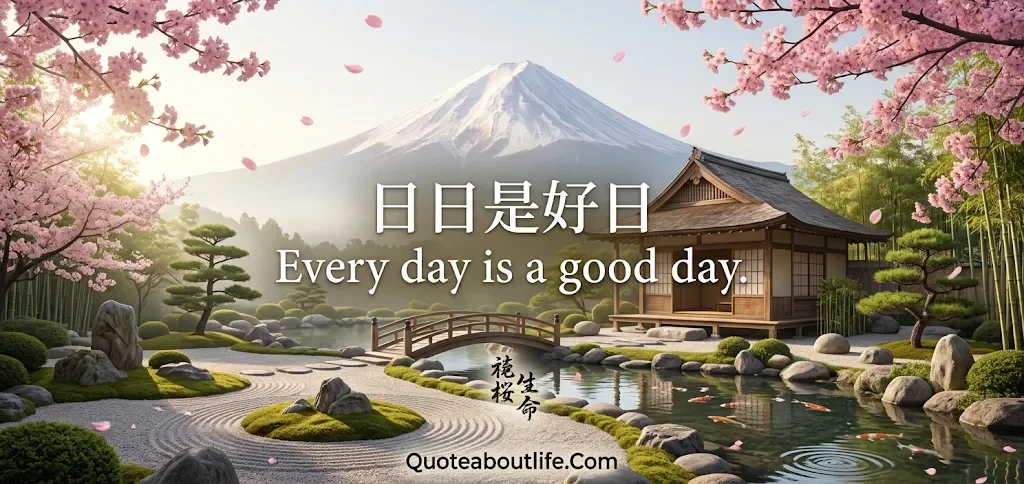
Calm sits at the heart of Japanese culture. It comes from Zen Buddhism, Shinto, the tea ceremony and a deep love of the seasons.
Nature may even help the body. Researchers studied 280 people across 24 forests in Japan. Forest settings led to lower cortisol, lower blood pressure and a lower pulse rate than city settings. The practice is called shinrin-yoku (forest bathing). Read the study.
Zen and mindfulness
- 一期一会 (Ichigo ichie): One time, one meeting. It comes from the tea ceremony.
- 日日是好日 (Nichinichi kore kojitsu): Every day is a good day.
- 諸行無常 (Shogyo mujo): All things change.
- 本来無一物 (Honrai mu ichimotsu): At the root, nothing is owned.
- 和敬清寂 (Wa kei sei jaku): Harmony, respect, purity, calm. These are the four ideals of tea.
- 吾唯足るを知る (Ware tada taru o shiru): I only know that I have enough.
- 少欲知足 (Sho-yoku chisoku): Want little. Know contentment.
- 無心 (Mushin): No-mind. Act without clutter.
- 平常心 (Heijoshin): An everyday, steady mind.
- 明鏡止水 (Meikyo shisui): A clear mirror and still water.
- 心頭滅却すれば火もまた涼し (Shinto mekkyaku sureba hi mo mata suzushi): Clear your mind and even fire feels cool.
- 色即是空 (Shikisoku zekuu): Form is emptiness.
- 以心伝心 (Ishin denshin): Heart to heart, no words needed.
- 初心忘るべからず (Shoshin wasurubekarazu): Never lose a beginner’s heart.
- 閑さや岩にしみ入る蝉の声 (Shizukasa ya iwa ni shimiiru semi no koe): Stillness. A cicada’s cry seeps into the rock.
- 一日一善 (Ichinichi ichizen): One good deed a day.
Nature and the seasons
- 花鳥風月 (Kacho fugetsu): Flower, bird, wind, moon.
- 桜梅桃李 (Obai tori): Cherry, plum, peach, apricot. Each blooms in its own time.
- 山川草木 (Sansen somoku): Mountains, rivers, grass, trees.
- 自然体 (Shizentai): Your natural posture.
- 春夏秋冬 (Shunka shuto): Spring, summer, autumn, winter.
- 雪月花 (Setsugekka): Snow, moon, flowers.
- 花は桜木人は武士 (Hana wa sakuragi hito wa bushi): Among flowers, the cherry. Among people, the warrior.
- 散る桜残る桜も散る桜 (Chiru sakura nokoru sakura mo chiru sakura): Falling blossoms now. The rest will fall too. (Attributed to Ryokan)
- 月に叢雲花に風 (Tsuki ni murakumo hana ni kaze): Clouds for the moon, wind for the flowers.
- 一葉落ちて天下の秋を知る (Ichiyo ochite tenka no aki o shiru): One falling leaf tells you autumn is here.
- 三寒四温 (Sankan shion): Three cold days, four warm ones.
- 暑さ寒さも彼岸まで (Atsusa samusa mo higan made): Heat and cold last until the equinox.
- 春眠暁を覚えず (Shunmin akatsuki o oboezu): In spring, you sleep through dawn.
- 風の便り (Kaze no tayori): News on the wind.
- 花より団子 (Hana yori dango): Dumplings over flowers.
- 棚からぼた餅 (Tana kara botamochi): A rice cake falls from the shelf. Sweet luck.
- 犬も歩けば棒に当たる (Inu mo arukeba bo ni ataru): A walking dog meets a stick. Moving brings surprises.
Happiness, health and kindness
- 笑う門には福来る (Warau kado ni wa fuku kitaru): Luck visits the home that laughs.
- 福は内鬼は外 (Fuku wa uchi oni wa soto): Luck in, demons out.
- 一富士二鷹三茄子 (Ichi Fuji ni taka san nasubi): Mt. Fuji, hawk, eggplant. The luckiest first dream of the year.
- 残り物には福がある (Nokorimono ni wa fuku ga aru): There is luck in what’s left.
- 捨てる神あれば拾う神あり (Suteru kami areba hirou kami ari): One god leaves, another helps.
- 好きこそ物の上手なれ (Suki koso mono no jozu nare): You get good at what you love.
- 病は気から (Yamai wa ki kara): Illness starts in the mind.
- 腹八分目 (Hara hachibunme): Eat until you are 80 percent full.
- 早起きは三文の徳 (Hayaoki wa sanmon no toku): Early rising pays a small reward.
- 寝る子は育つ (Neru ko wa sodatsu): A sleeping child grows.
- 医食同源 (Ishoku dogen): Food and medicine share one root.
- 腹も身のうち (Hara mo mi no uchi): The belly is part of the body.
- 情けは人の為ならず (Nasake wa hito no tame narazu): Kindness comes back to you.
- お互い様 (Otagaisama): We are in this together.
- 魚心あれば水心 (Uogokoro areba mizugokoro): If the fish is kind, the water is kind.
- 同じ釜の飯を食う (Onaji kama no meshi o kuu): Eat from the same pot. Share life.
- 友あり遠方より来る (Tomo ari enpo yori kitaru): A friend comes from afar. What a joy!
Japanese life concepts you can feel
- 生き甲斐 (Ikigai): A reason to get up in the morning.
- 侘び寂び (Wabi-sabi): Beauty in the plain and the imperfect.
- 物の哀れ (Mono no aware): A soft sadness for passing things.
- 金継ぎ (Kintsugi): Mend broken pottery with gold. Scars become art.
- 木漏れ日 (Komorebi): Sunlight filtering through leaves.
- 森林浴 (Shinrin-yoku): Forest bathing. The term was coined in 1982 by Japan’s forestry ministry, as this paper notes.
- 間 (Ma): The pause. The space between things.
- 幽玄 (Yugen): Deep, quiet mystery.
- もったいない (Mottainai): Don’t waste what has value.
- おもてなし (Omotenashi): Care for guests without being asked.
- 粋 (Iki): Effortless, stylish grace.
- 縁 (En): The bond that links people.
- 心 (Kokoro): Heart, mind and spirit as one.
- 簡素 (Kanso): Simplicity.
- 渋い (Shibui): Quiet, deep beauty.
- 花見 (Hanami): Sitting under cherry blossoms.
- 癒し (Iyashi): Healing calm.
- 懐かしい (Natsukashii): A warm longing for the past.
- ゆとり (Yutori): Room to breathe.
- 感謝 (Kansha): Gratitude.
Four-character idioms for calm and joy
- 平穏無事 (Heion buji): Peaceful and safe.
- 無病息災 (Mubyo sokusai): Good health, no harm.
- 天下泰平 (Tenka taihei): Peace across the land.
- 家内安全 (Kanai anzen): A safe home.
- 一家団欒 (Ikka danran): A happy family gathering.
- 喜怒哀楽 (Kidoairaku): Joy, anger, sorrow, pleasure.
- 前途洋洋 (Zento yoyo): A bright road ahead.
- 悠悠自適 (Yuyu jiteki): Living at ease.
- 晴耕雨読 (Seiko udoku): Farm in sun. Read in rain.
- 春風駘蕩 (Shunpu taito): A gentle spring breeze.
- 風光明媚 (Fuko meibi): Beautiful scenery.
- 山紫水明 (Sanshi suimei): Purple hills and clear water.
- 一陽来復 (Ichiyo raifuku): Good fortune returns.
- 自給自足 (Jikyu jisoku): Self-sufficient living.
- 和気藹々 (Waki aiai): A warm, friendly mood.
- 温厚篤実 (Onko tokujitsu): Gentle and sincere.
While Japanese wisdom offers timeless lessons on inner peace, happiness, and personal growth, sometimes life’s most meaningful reminders come wrapped in humor and laughter. Explore these funny SpongeBob quotes about life to enjoy hilarious moments, celebrate friendship, and discover positivity in everyday adventures.
Powerful Japanese Quotes About Strength and Perseverance

Strength in Japan is often quiet. It looks like gaman (patient endurance) and ganbaru (doing your best). These quotes are for tough days.
Never give up
- 七転び八起き (Nanakorobi yaoki): Fall seven times, rise eight.
- 石の上にも三年 (Ishi no ue ni mo sannen): Sit on a stone for three years and it warms up.
- 継続は力なり (Keizoku wa chikara nari): Keeping going is power.
- 努力は裏切らない (Doryoku wa uragiranai): Effort does not betray you.
- 苦あれば楽あり (Ku areba raku ari): After pain comes ease.
- 千里の道も一歩から (Senri no michi mo ippo kara): A thousand miles starts with one step.
- 塵も積もれば山となる (Chiri mo tsumoreba yama to naru): Dust piles into a mountain.
- 雨垂れ石を穿つ (Amadare ishi o ugatsu): Dripping water pierces stone.
- 一念岩をも通す (Ichinen iwa o mo tosu): Firm will cuts through rock.
- 精神一到何事か成らざらん (Seishin itto nanigoto ka narazaran): With full focus, what can’t be done?
- 明けない夜はない (Akenai yo wa nai): No night lasts forever.
- 止まない雨はない (Yamanai ame wa nai): No rain never stops.
- 雨降って地固まる (Ame futte ji katamaru): After the rain, the ground hardens.
- 禍を転じて福となす (Wazawai o tenjite fuku to nasu): Turn bad luck into good.
- 窮すれば通ず (Kyu sureba tsuzu): At the end of the road, a path opens.
- 艱難汝を玉にす (Kannan nanji o tama ni su): Hardship polishes you like a jewel.
- 若い時の苦労は買ってでもせよ (Wakai toki no kuro wa katte de mo seyo): Seek hardship while you are young.
- 念ずれば花ひらく (Nenzureba hana hiraku): Hold your wish and the flower opens.
- 諦めない (Akiramenai): I won’t give up.
Action and courage
- 鉄は熱いうちに打て (Tetsu wa atsui uchi ni ute): Strike while the iron is hot.
- 思い立ったが吉日 (Omoitatta ga kichijitsu): The day you decide is the lucky day.
- 善は急げ (Zen wa isoge): Do good things fast.
- 有言実行 (Yugen jikko): Say it, then do it.
- 不言実行 (Fugen jikko): Just do it, quietly.
- 初志貫徹 (Shoshi kantetsu): Stay true to your first goal.
- 清水の舞台から飛び降りる (Kiyomizu no butai kara tobioriru): Jump from the Kiyomizu stage. Take the big leap.
- 虎穴に入らずんば虎子を得ず (Koketsu ni irazunba koji o ezu): No tiger cub without entering the den.
- 当たって砕けろ (Atatte kudakero): Give it a go, even if you crash.
- 背水の陣 (Haisui no jin): Fight with the river at your back.
- 一か八か (Ichi ka bachi ka): All or nothing.
- 一生懸命 (Isshokenmei): With all your might.
- 破竹の勢い (Hachiku no ikioi): Unstoppable, like splitting bamboo.
Quiet strength
- 柳に雪折れなし (Yanagi ni yukiore nashi): Willow branches don’t snap under snow.
- 柔よく剛を制す (Ju yoku go o seisu): Softness beats hardness.
- 縁の下の力持ち (En no shita no chikaramochi): The strong one under the porch. An unsung hero.
- 負けるが勝ち (Makeru ga kachi): Losing can be winning.
- 失敗は成功のもと (Shippai wa seiko no moto): Failure is the root of success.
- 弘法筆を選ばず (Kobo fude o erabazu): A master doesn’t blame the brush.
- 我慢 (Gaman): Patient endurance.
- 頑張る (Ganbaru): Do your best. Hang in there.
- 根性 (Konjo): Guts and grit.
- 克己 (Kokki): Win over yourself.
- 不撓不屈 (Futo fukutsu): Never bend. Never yield.
- 臥薪嘗胆 (Gashin shotan): Endure hardship for a big goal.
- 泣きっ面に蜂 (Nakittsura ni hachi): A bee sting on a crying face. Hard times stack up.
- 勝って兜の緒を締めよ (Katte kabuto no o o shimeyo): After winning, tighten your helmet.
- 風林火山 (Furin kazan): Wind, forest, fire, mountain.
- 一騎当千 (Ikki tosen): One rider worth a thousand.
- 不動心 (Fudoshin): An unmoving mind.
Samurai values (bushido)
- 義 (Gi): Doing what is right.
- 勇 (Yu): Courage.
- 仁 (Jin): Kindness.
- 礼 (Rei): Respect.
- 誠 (Makoto): Honesty.
- 名誉 (Meiyo): Honor.
- 忠義 (Chugi): Loyalty.
- 武士道 (Bushido): The way of the warrior.
- 武士は食わねど高楊枝 (Bushi wa kuwanedo takayoji): A samurai keeps his pride, even hungry.
- 武士に二言はない (Bushi ni nigon wa nai): A samurai does not take back his word.
Four-character idioms for strength
- 一心不乱 (Isshin furan): Total focus.
- 心機一転 (Shinki itten): A fresh start.
- 一念発起 (Ichinen hokki): Make a firm decision to begin.
- 起死回生 (Kishi kaisei): Come back from the brink.
- 勇猛果敢 (Yumo kakan): Brave and bold.
- 順風満帆 (Junpu manpan): Full sails, fair wind.
- 七転八起 (Shichiten hakki): Fall seven, rise eight.
- 一意専心 (Ichi-i senshin): One goal, full heart.
- 堅忍不抜 (Kennin fubatsu): Firm and unshakable.
- 百折不撓 (Hyakusetsu futo): A hundred setbacks, still unbent.
- 猪突猛進 (Chotsu mosshin): Charge like a boar.
- 百戦錬磨 (Hyakusen renma): Tested in a hundred battles.
- 大願成就 (Taigan joju): A big wish comes true.
- 気力充実 (Kiryoku jujitsu): Full of energy.
More brave words
- 勝負は時の運 (Shobu wa toki no un): Winning is partly luck.
- 人事を尽くして天命を待つ (Jinji o tsukushite tenmei o matsu): Do your best, then trust fate.
- 転んでもただでは起きぬ (Koronde mo tada de wa okinu): Even in a fall, grab something useful.
- 終わりよければすべてよし (Owari yokereba subete yoshi): All is well that ends well.
- 後悔先に立たず (Koukai saki ni tatazu): Regret never comes first.
- 一寸の虫にも五分の魂 (Issun no mushi ni mo gobu no tamashii): Even a tiny bug has a spirit.
- 石に立つ矢 (Ishi ni tatsu ya): Focus can drive an arrow into stone.
- 蛍雪の功 (Keisetsu no ko): Study hard, even by firefly light.
- 千載一遇 (Senzai ichigu): A once-in-a-thousand-years chance.
How can you use Japanese quotes in daily life? Pick one each morning. Say it out loud. Read the romaji slowly, one beat per syllable. Then write it on a sticky note.
FAQs
What is the most famous Japanese quote about life?
七転び八起き (Nanakorobi yaoki) is one of the best known. It means “fall seven times, rise eight.” 一期一会 (Ichigo ichie) is also very popular. It reminds you to treasure every meeting because it will never repeat the same way.
What do Japanese quotes say about inner peace and happiness?
They link calm to nature, gratitude, simple living and the present moment. Zen sayings like 日日是好日 (every day is a good day) and ideas like wabi-sabi teach people to enjoy small things and accept change.
What is the difference between a Japanese quote and a Japanese proverb?
A Japanese proverb (kotowaza) is old folk wisdom with no known author. A Japanese quote (kakugen) often comes from a named person, such as a poet, teacher or samurai. Both give short, useful life advice.
Is it popular to learn Japanese in the US?
Yes. A report on US college language study found that Japanese rose to fourth place in enrollments, taking German’s spot. You can see the details in the MLA enrollment report summary.
Conclusion
Japanese quotes about life teach three big things. Wisdom comes from humility. Inner peace comes from noticing small moments. Strength comes from steady effort.
Pick one quote from this list and live with it today. Small steps, like the 千里の道も一歩から proverb says, change a whole life.

Abroy Muzamil is a dedicated content writer who enjoys exploring words, meanings, and language. He aims to make information clear, useful, and easy to understand for readers. Through his writing, Abroy focuses on creating engaging, reader-friendly content that helps people discover the meanings of words, understand everyday expressions, and expand their vocabulary.